
Mathematics: Equitable Contexts
This year’s conference will offer the chance to explore different ways of thinking about equitable contexts in mathematics and implications for teaching and learning mathematics across all phases.
Key Note Speakers, Mike Askew, Sue Hough and Tanya Ovenden-Hope, will prompt thinking by taking three different approaches to considering this theme.
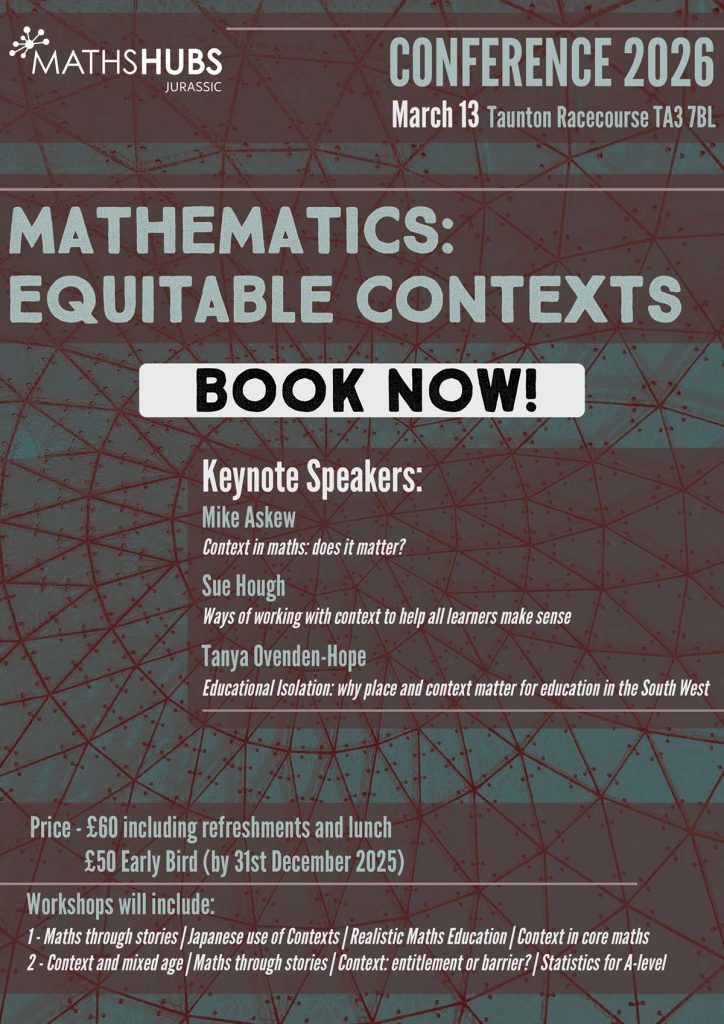
The Conference is an opportunity for teachers and leaders of Mathematics at all phases from EYFS through to Post 16 to work collaboratively. We aim to provide space for educators to think mathematically and reflect on their role as classroom practitioners and/or as professional development leads of mathematics. This year our focus is on creating equitable contexts for mathematics. The Conference will offer the chance to explore context in a range of ways, with a choice of workshops exploring a variety of contexts in addition to the three key note speakers.
The 2026 conference will take place on the 13th March 2026 at Taunton Racecourse. The event will start at 9.30am, with arrivals welcome from 9.00am. We are offering places on a first come first served basis.
Ticket price £60, to include refreshments and lunch.
Keynote Speakers:
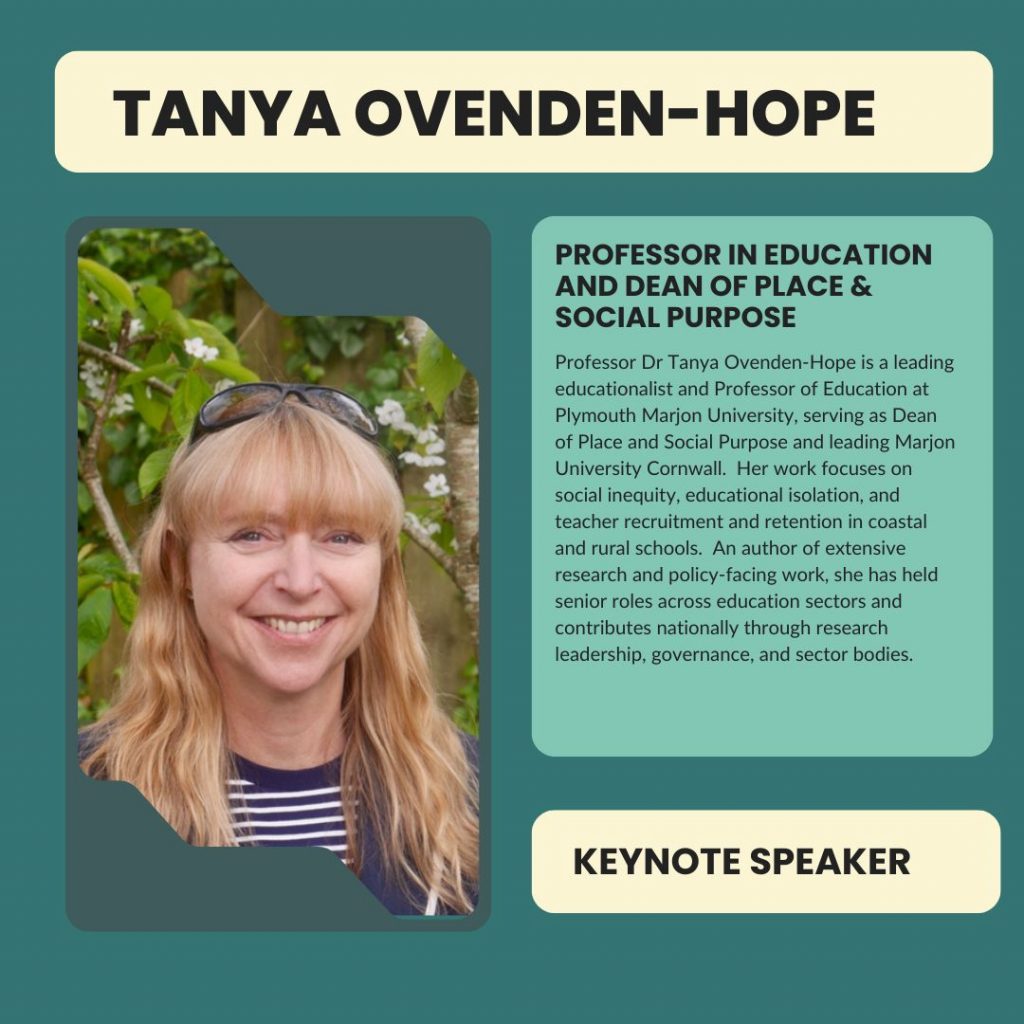
Educational Isolation: why place and context matter for education in the South West.
Tanya will introduce you to the concept of Educational Isolation (Ovenden-Hope and Passy, 2019) as a lens to identify and explore place-based challenges and assets for schools in the South West of England. There will be a focus on teacher recruitment and retention to understand why Math’s teachers are like ‘hen’s teeth’ in the South West. The role that government policy plays in this place-based challenge will be considered. This policy context for schools in the South West will support final reflections on the meaning of educational isolation and potential solutions to mitigate it.
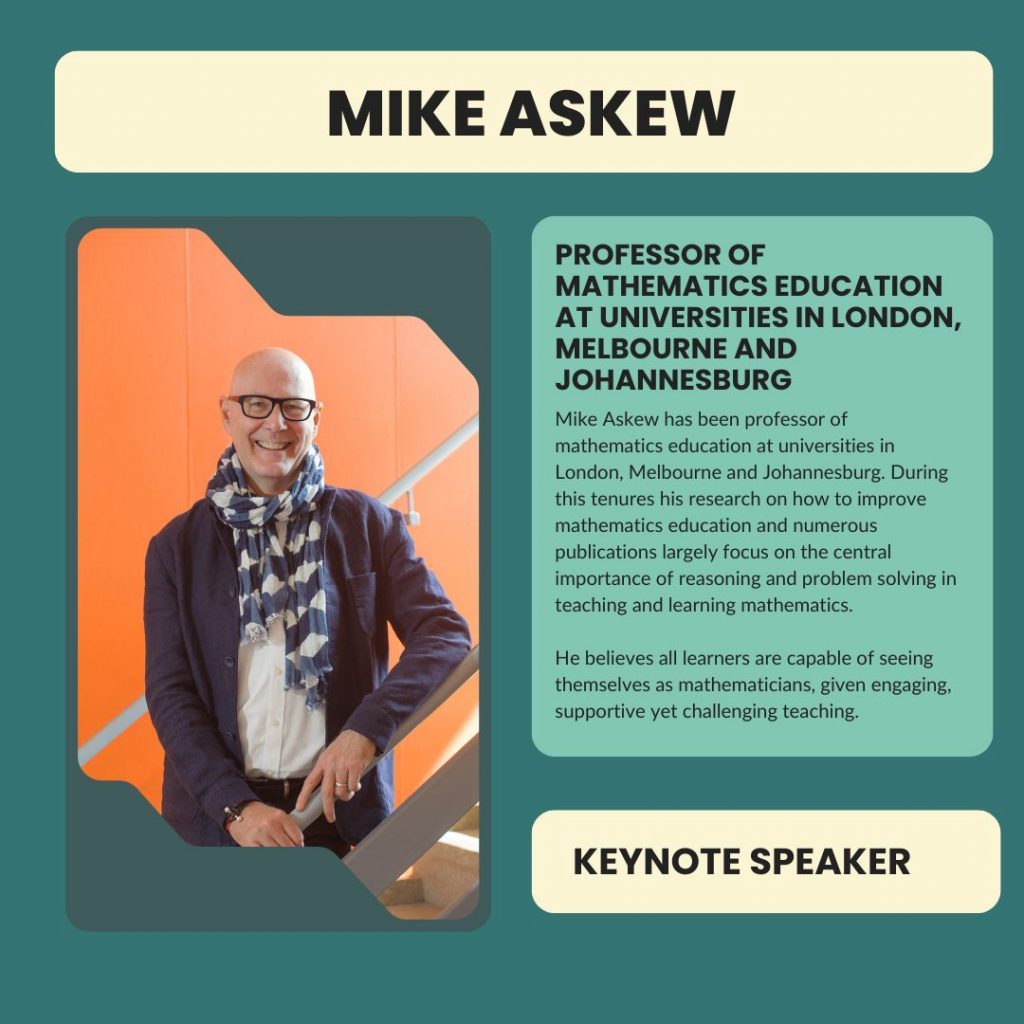
Context in Maths: does it matter?
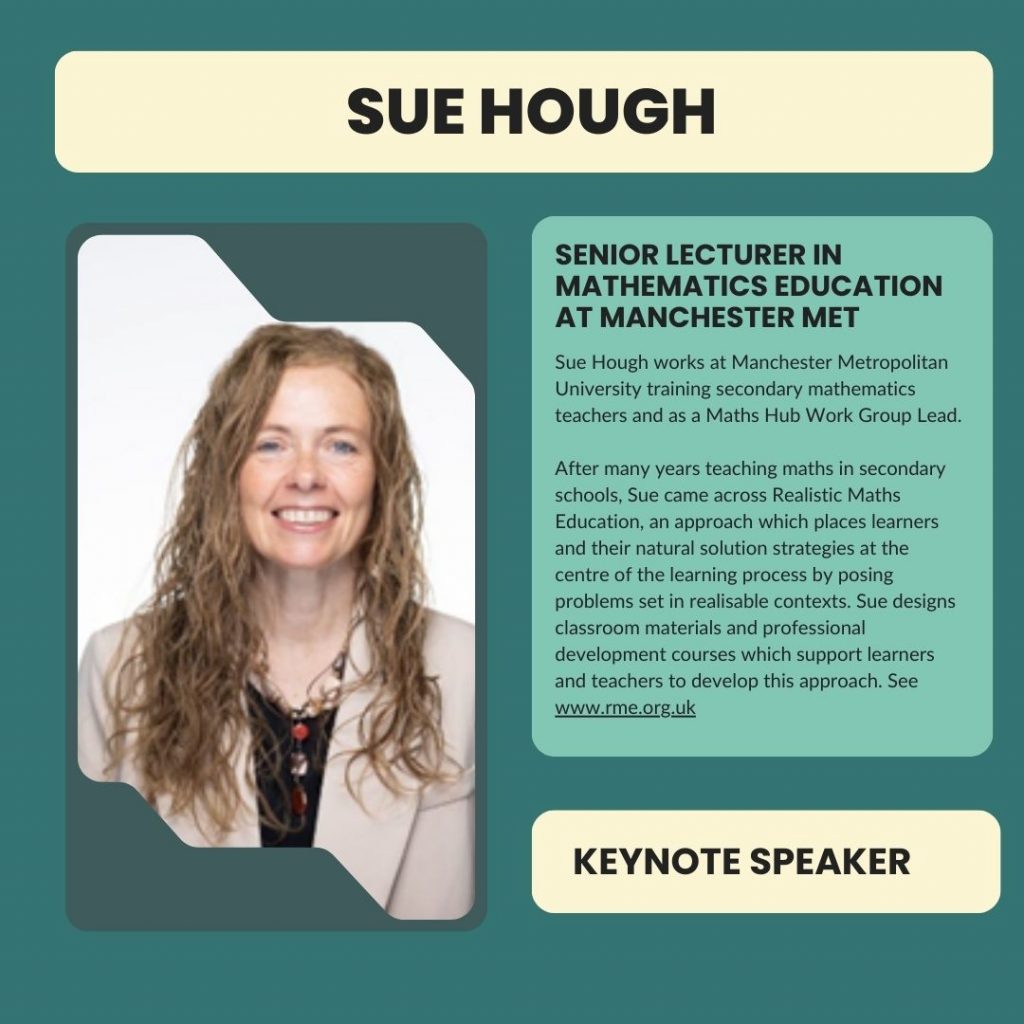
Ways of working with context to help all learners make sense.
Carefully chosen contexts can be worked in such a way that they support learners to take ownership of their mathematics. A context can expose for a learner why a particular solution strategy makes sense, releasing them from the need to rely on memory of formal procedures. In the theory of Realistic Maths Education, the relationship between a context and the associated solution strategies is known as ‘emergent modelling’. In this session, we will consider examples of tried and tested contexts, how learners interact with these contexts in the classroom and how teachers can support all learners to make progress through gradually refining their own solution strategies.
Breakout session 1:
- (R/KS1) Maths through stories
- (KS1/2) Japanese use of contexts
- (KS2/3/4) Realistic Maths Education
- (KS5) Context in Core Maths
Breakout session 2:
- (R/KS1) Context and mixed age
- (KS2) Context and mixed age
- (KS2-KS4) Maths through stories
- (KS3/4) Context: entitlement or barrier
- (KS5) Statistics for A-level
